Home / Tables
Table formatsWhat to know before choosing an InstantPlay table
A 13-card fan with no pure sequence is the real lobby. Format decides the bill, not the felt colour.
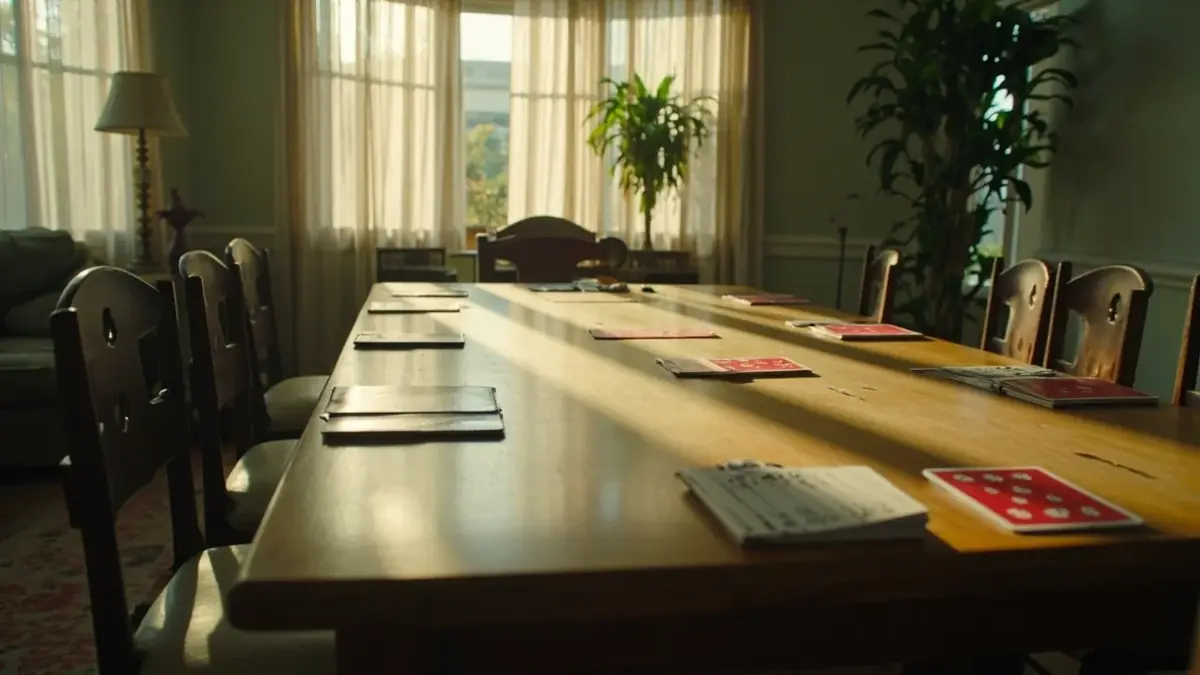
Sorting thirteen cards before the first discard
The useful picture is not a lobby grid. It is a 13-card fan that still has no pure sequence. The next thirty seconds decide whether the seat is Points, Pool, or Deals, because the cost of a bad start is not the same in those three rooms.
Points settles every hand against a per-point unit. Pool 101 and Pool 201 keep a running total and drop a player who crosses the printed line. Deals lock a hand count and then stop. Treat those as separate products.
If InstantPlay hides the format chip behind a generic "Play" tile, do not guess. Open the table info panel. A missing chip is a reason to sit out, not a reason to improvise.
Points tables bill every hand
A first drop, a middle drop, and an invalid declare are the three printed costs most Indian Points rooms show. Many sheets still use 20, 40, and an 80-point cap. Those numbers are common print. InstantPlay must reprint them on the seat you actually join.
The skill job is deadwood control against those printed rows. The money job is knowing the unit before the deal. Mixing those jobs is how a "small table" becomes an unreadable bill.
Pool 101 and Pool 201 eliminate, they do not settle each deal
Crossing 101 or 201 is the stop. A pretty meld that still sits on a high total is a losing path. Drop timing in Pool is about the printed line, not about looking busy.
If InstantPlay offers both 101 and 201, read which line is active. Players who bounce between those seats without resetting their stop rule treat two products as one.
Deals are a fixed-hand match
A Deals table should name the hand count before the buy-in. After the last hand, the session is over. That is the whole product. If InstantPlay continues dealing, the seat is not the product you thought you bought.
Strategy inside Deals is about surviving the printed count, not about hunting a late hero sequence. See strategy limits for when chasing a third sequence is just deadwood.
Thirteen-card versus ten-card seats
Ten-card Indian rummy is not a shorter tutorial. Life requirements and wild use often change. If InstantPlay lists both widths, treat them as different catalogs.
| Format | Stop condition | Stake unit to verify | When to leave |
|---|---|---|---|
| Points | Each hand bills | Per-point value | Unit unclear or drop costs hidden |
| Pool 101 | Elimination at 101 | Buy-in for the pool | Line is close and no valid declare path |
| Pool 201 | Elimination at 201 | Buy-in for the longer pool | Same test, slower clock |
| Deals | Printed hand count | Match buy-in | Hand count missing or exceeded |
| 10-card | House-specific | Do not copy 13-card units | Life rules not printed |
An empty chair is still a product decision
An open InstantPlay seat is not an invitation to auto-join. Confirm format, unit, and 18+ before the deal lands. Then open the declare path.
A private worksheet before you sit
Write four numbers on paper: the format name, the stake unit as printed, the first printed drop, and the minutes you will stay. If any of those four is missing from the InstantPlay seat, the worksheet is unfinished. Unfinished worksheets do not get a buy-in.
Points units look small because they are per point. A 20-point first drop at two rupees a point is already a 40-rupee exit. Pool buy-ins look large because they cover a longer elimination line. Deals buy-ins look tidy because the hand count is finite. Mixing those three feelings in one evening is how a reader loses the plot.
Ten-card seats deserve their own worksheet. Do not copy a 13-card drop row onto a 10-card chip. If InstantPlay uses the same chip art for both widths, ignore the art and read the text.
A table that auto-renews after Deals without a confirm is a different product. Leave, keep the timestamp, and use customer care if money moved. This desk will not guess InstantPlay's auto-renew setting.
State blocks and the 2025 Act sit above any format debate. A perfectly understood Points table is still the wrong table if local rules or the statute say the stake is not allowed. Read legality notes before the worksheet becomes a habit.
When the worksheet is complete, the next useful task is the declare path, not a second format. Switching seats to "feel luckier" is not a format decision. It is a stall.
Worked examples that stay on paper
Example A, labeled illustration only: a Points unit of two rupees and a first drop printed at 20 points means a 40-rupee exit if you leave immediately. If InstantPlay prints a different pair, throw this example out. The method stays. Multiply the printed unit by the printed drop. Do not average them. Do not "feel" them.
Example B: Pool 101 with a 200-rupee buy-in is a different object. The 200 rupees buy the right to stay until the printed line. Leaving at 80 points because the cards are ugly may be correct strategy and still a poor buy-in decision if you joined a long pool with a short attention span.
Example C: a Deals match of two hands for 50 rupees has a known stop. If InstantPlay deals a third hand without a confirm, the object changed. Stop playing. Write the time. That note is more useful than a complaint written from memory the next day.
Ten-card examples must not borrow 13-card arithmetic. If InstantPlay lists both, open them in two browser tabs and copy the printed rows side by side. If the rows are identical, that itself is a finding worth keeping. Identical rows across widths are unusual in printed Indian practice and deserve a screenshot.
Stake units hidden behind a "play now" tile on the seat itself are a format fail. The homepage PLAY NOW button is a first-party route. The seat tile is a table. Those two objects should not share the same vagueness. If the seat hides the unit, sit out.
Readers who bounce from Points to Pool because the first hand went badly are not choosing a format. They are chasing. Put the format name on the worksheet before the evening starts and refuse to change it after a loss. Format shopping is a cousin of cap-breaking.
When two InstantPlay seats show the same felt art and different stop conditions, trust the text chip. Art is reused. Stop conditions are the product. If there is no text chip, there is no product, only a picture.
A final household rule: do not teach a new player on a Pool 201 seat. Teach on a physical deck, then on a Points seat whose unit you can name, then stop. InstantPlay is not a classroom. It is a table with a statute sitting over it.
Answers that belong on this topic
Is a 10-card seat the same as a 13-card seat with fewer cards?
No. Lives, wilds, and stop conditions usually change. Read the format chip.
When should a player leave a Pool table?
When the printed elimination line is close and the hand is not a valid declare path.
Do Deals tables keep running after the printed hand count?
They should stop. If InstantPlay keeps dealing, leave and write down the screen.
Are stake units comparable across formats?
No. A Points unit is not a Pool buy-in. Convert nothing in your head.
Where next after picking a format?
Open the declare checklist, then strategy limits.
18+ only. Common printed rummy figures are teaching rows, not InstantPlay house facts, unless the table prints them. The Promotion and Regulation of Online Gaming Act, 2025 restricts online money games. This desk invents no licence, bonus, or payout clock.